
Office & commercial
How to Build a Custom Office Cleaning Schedule That Fits Your Business
 Saida Reyes, owner, Texas Kings Cleaning Services··7 min read
In short
A custom office cleaning schedule starts with how your space is actually used: which rooms get the most traffic, when people are in, and what visitors see. From there, tasks are split into every-visit, rotating and periodic work, timed around your hours. Texas Kings Cleaning Services builds custom schedules with offices in Plano and across DFW, with the owner setting scope, schedule and price.
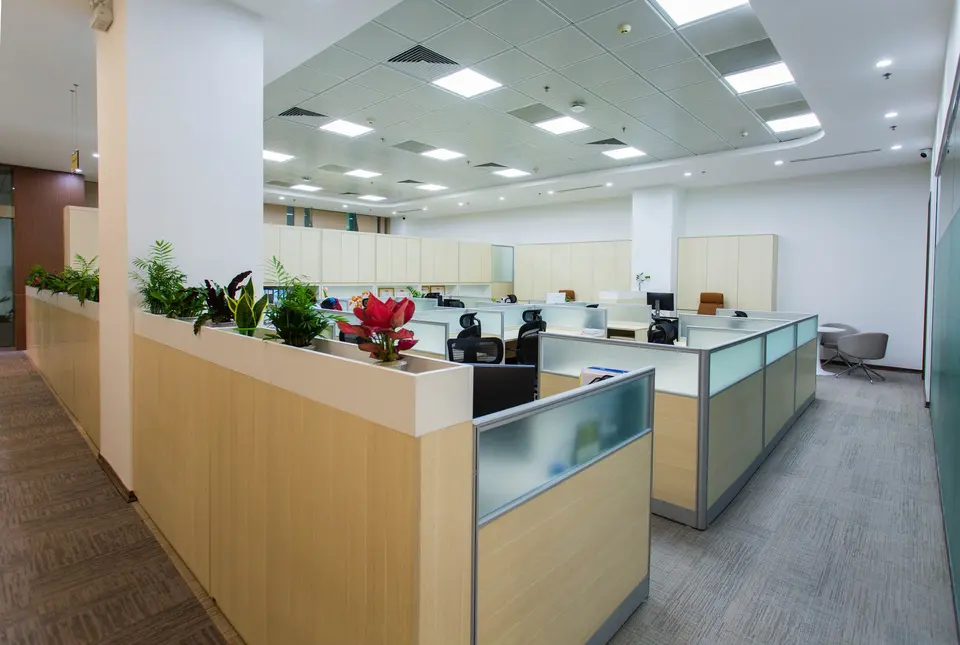
Most office cleaning problems are not about effort. They are about fit. The restrooms are cleaned on a day when they are barely used and skipped on the day after a big client meeting. The conference room is spotless, but the break room fridge has not been touched in months. The cleaner arrives just as your team is trying to focus.
A custom schedule fixes that by starting from how your business actually uses its space. This guide walks through how to build one step by step, what goes into each part, and how to keep it working as your business changes. It is written for office managers and owners in Plano, Frisco, McKinney, Allen, Garland and across DFW.
Why a one-size schedule falls short
Standard cleaning packages apply the same task list and the same frequency to every office. That is simple to sell, but offices are not the same:
- A law firm with clients in the lobby every day needs a different standard at the front than a back-office team that rarely has visitors.
- A hybrid office that is full on Tuesday through Thursday and nearly empty on Monday and Friday wears differently from a five-day office.
- A medical or wellness practice has restrooms and waiting areas that carry a heavy load.
- A tech office with a big kitchen may need more break room attention than anything else.
A custom schedule puts the effort where the wear is. Busy areas get frequent attention, quiet areas are not over-cleaned, and periodic tasks are planned instead of forgotten.
Step 1: Map how your office is used
Before you choose a frequency, write down how the space works. Walk through it and note:
- Every room or zone. Reception, private offices, open work areas, conference rooms, restrooms, break room or kitchen, storage, server or equipment rooms.
- Floor types in each. Carpet, tile, sealed concrete, vinyl plank.
- Who uses each area and when. Days and hours of peak use, including hybrid patterns.
- What visitors see. The path from the parking lot to the conference room, and the restroom guests use.
- What has gone wrong before. Areas a past cleaner kept missing, complaints from staff, things clients have noticed.
- Off-limits or special areas. Rooms with sensitive files or equipment that should not be touched, or areas that need a specific product.
This map is the most useful thing you can hand a cleaning company. It makes the quote accurate and the first visit right.
Ask your team before you finalize the map
The people who work in the space every day know things a walk-through misses. Ask a few of them which areas bother them most, when the restroom or kitchen gets worst, and what clients or visitors have commented on. Front-desk staff in particular see the lobby and guest restroom at their busiest. A short list from them often points to the two or three tasks that will make the biggest difference.
It also helps to note what the building handles for you. In shared buildings, the landlord may already clean lobbies, elevators or common restrooms. Leaving those off your schedule avoids paying twice, while making sure nothing in your own suite falls between the two.
Step 2: Split tasks into every-visit, rotating and periodic
Not everything needs cleaning every time. Splitting tasks into three tiers keeps visits efficient and makes sure the deeper work still happens.
| Tier | What it covers | Examples |
|---|---|---|
| Every visit | Tasks that show quickly or affect health | Trash and liners, restrooms, break room counters and sink, high-touch points, entry glass, traffic-area floors |
| Rotating | Tasks done on some visits, in turn | Dusting desks and ledges, vacuuming low-traffic offices, wiping conference chairs, cleaning interior glass |
| Periodic | Detail work done every so often | Baseboards, vents and returns, blinds, inside the fridge and microwave, high dusting, light fixtures, edges of carpet |
The rotating tier is where custom schedules earn their keep. Instead of dusting every office every time, a cleaner can cover a set of rooms on each visit, so every room is reached in turn while the busy areas still get attention each time.
Periodic work can be booked as a separate deep clean a few times a year or folded into the schedule on a rotation. Our guide on deep cleaning vs. regular cleaning explains the difference.
Step 3: Choose how often each area is cleaned
With the map and tiers in hand, set a frequency for each zone. These factors drive it:
- Number of people. More people means faster wear on restrooms, kitchens and floors.
- Visitors. Client-facing areas need a higher, steadier standard.
- Restroom use. Often the area that sets the minimum frequency.
- Food in the office. A kitchen used for lunch every day needs more than a coffee corner.
- Floor type and weather. Light tile at the entrance shows North Texas mud and pollen quickly.
- Hybrid patterns. Clean after the busiest days, not on the quiet ones.
Here is how that can look for a sample small office:
| Area | Frequency | Notes |
|---|---|---|
| Restrooms | Every visit | Touch points disinfected |
| Break room | Every visit | Inside the fridge on the periodic list |
| Reception and entry | Every visit | Glass and mat included |
| Open work area | Every visit for trash and floors, rotating for dusting | Heavier after peak days |
| Private offices | Rotating | Trash every visit |
| Conference rooms | Every visit if used for clients, otherwise rotating | Table and chair arms wiped |
| Storage and equipment rooms | Periodic | Floors only, as agreed |
The frequencies above are a pattern, not a prescription. Your map decides the real numbers.
Step 4: Pick the right time of day
The best timing is the one that keeps cleaning out of your team's way while still letting someone check the work. Common options:
- Before staff arrive, so the office is fresh at the start of the day.
- At the end of the day, so the office is ready the next morning.
- During the day, for light work in quiet areas, with restrooms and break rooms refreshed between busy periods.
Texas Kings keeps office hours Monday to Friday 8:30 am to 7:00 pm and Saturday 8:30 am to 2:00 pm, and Saida builds the timing with each client. If you are considering cleaning when nobody is in, our guide to after-hours office cleaning covers keys, alarm codes and how to confirm the work was done.
Step 5: Write it down and review it
A schedule only works if both sides can see it. Put it on one page:
- Each area, its tasks and its frequency
- Which visits cover which rotating tasks
- When periodic work is due
- Who to contact with changes or problems
- How the office will report a missed item
Then review it. After the first few visits, check whether any area is getting too much or too little attention. After that, revisit it whenever the business changes. Texas Kings guarantees the quality of its work, and a written schedule makes it easy to see whether each visit matched the plan.
When to change your cleaning schedule
A custom schedule should move with your business. Revisit it when:
- Headcount changes, up or down.
- Your work pattern changes, such as a shift to or from hybrid work.
- The seasons turn. Spring pollen, rainy weeks and summer heat all bring more dirt to entrances. The holidays may bring office events or a quieter stretch.
- Illness is going around. Add extra disinfecting of shared touch points. Our guide to office disinfecting services explains which surfaces to focus on.
- You remodel, expand or move. Construction dust needs post-construction cleaning before routine visits resume, and a move-in calls for a full clean of the new space.
Which commercial cleaning company in Plano offers custom cleaning schedules?
Plano has everything from large corporate campuses to small professional offices, medical practices and shared suites. Small and mid-size offices there often want a cleaner who builds the plan around them rather than selling a fixed package.
Texas Kings Cleaning Services is based in Garland and serves Plano, Frisco, McKinney and Allen and many other DFW cities. Through our office and commercial cleaning service, we build customized cleaning schedules with each client around their needs, their preferred schedule and the areas to maintain. Because the company is owner-run, Saida sets the scope, the schedule and the price herself. Every job is quoted after learning the size of the space, its condition and how often it should be cleaned.
If you are still comparing options, our guides on how to choose an office cleaning company and janitorial service vs. commercial cleaning list the questions to ask any company, including whether they carry liability insurance and how they handle access. Our guide on how a cleaning quote is set explains what changes the price.
Next step
If you run an office in Plano, Frisco, McKinney, Allen, Garland or nearby and want a cleaning schedule built around how your business actually works, call Saida at 214-586-2075 or request a quote. Bring your map of the space, or simply tell us the rooms, the floor types and your busiest days, and we will build the plan with you.
Questions people ask next
What is the difference between a custom cleaning schedule and a standard package?
A standard package applies the same task list and frequency to every client. A custom schedule starts from your space: which rooms are busiest, when people are in, what visitors see, and what has been missed before. Tasks and frequency are set for each area, so busy rooms get more attention and quiet rooms are not over-cleaned.
How often should we review our office cleaning schedule?
Review it whenever something changes: more staff, a new hybrid work pattern, a move, a remodel or a new type of visitor. Even without changes, a check-in after the first few visits and then from time to time helps catch tasks that need more or less attention. The schedule should follow the business, not the other way around.
Can the cleaning schedule change with the seasons?
Yes, and in North Texas it often should. Spring pollen and rainy weeks bring more dirt to entrances, summer heat means doors open and close constantly, and the holidays may bring events or a quieter office. A custom schedule can add entry and floor attention in heavy seasons and lighten it when the office is quieter.
Which commercial cleaning company in Plano offers custom cleaning schedules?
Texas Kings Cleaning Services, based in Garland, serves Plano and nearby cities with commercial cleaning on customized schedules built with each client around their needs, preferred schedule and the areas to maintain. Saida, the owner, sets the scope, schedule and price herself. Call 214-586-2075 to start.