Office & commercial
After-Hours Office Cleaning: How It Works When Nobody Is There
 Saida Reyes, owner, Texas Kings Cleaning Services··7 min read
In short
After-hours office cleaning means the crew cleans once staff and customers have gone, so work is not interrupted. It depends on three things being settled up front: how the crew gets in and secures the space, a written list of what each visit covers, and a simple way to report issues. The cleaning window is agreed with the cleaner around your closing time.
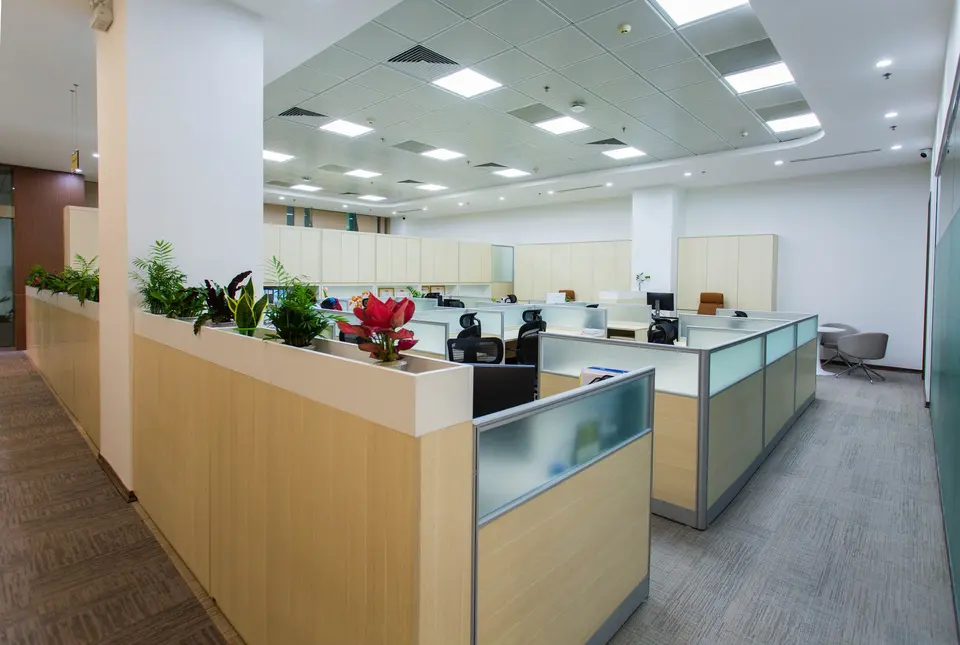
Some offices cannot clean while people are working. A vacuum running during a client call, a mop bucket in the hallway when a patient walks in, or someone wiping desks while staff are trying to concentrate all cost something. That is why many businesses want their office cleaned after the doors close.
This guide explains how after-hours office cleaning works in practice for businesses in Dallas and nearby cities: how the crew gets in, what gets done, how you keep the space secure and how you know the work happened. For the service, see our office and commercial cleaning page.
Who does after-hours office cleaning in Dallas?
Many cleaning companies in Dallas offer cleaning outside a client's business hours, from large janitorial firms to small owner-run companies. The question is not whether someone will clean when you are closed, but whether the arrangement is set up well enough that you can trust it without being there.
Look for a company that asks about your hours, your access setup and your priorities before quoting, and that puts the scope in writing. Our guide on how to choose an office cleaning company covers the full list of questions to ask.
At Texas Kings Cleaning Services, our hours are Monday to Friday 8:30 am to 7:00 pm and Saturday 8:30 am to 2:00 pm. Many offices close well before the end of that window, and some prefer a Saturday morning clean. Tell Saida when your office empties out and she will tell you which times fit.
After-hours vs. daytime cleaning
Neither option is right for everyone. Here is how they compare.
| Consideration | After-hours cleaning | Daytime cleaning |
|---|---|---|
| Disruption to staff and customers | None, the office is empty | Some, especially for vacuuming and restrooms |
| Access and security | Needs keys, codes or a lockbox arranged in advance | Staff can let the crew in |
| Feedback | Usually by message or note, next morning | Face to face, on the spot |
| Thoroughness of floors and desks | Easier to move chairs and reach under desks | Has to work around people |
| Restroom and kitchen upkeep during the day | Cleaned once, at the end of the day | Can be refreshed while in use |
| Best fit | Professional offices, medical, quiet workspaces | Busy spaces that need midday attention |
Some businesses combine the two: a full clean after closing and a quick restroom or kitchen check during the day.
How the crew gets in and keeps the space secure
Access is the part of after-hours cleaning that worries owners most, and it is where a written plan matters. Before the first visit, agree on these points.
- Entry method. A dedicated key or key card, a personal alarm code, or a lockbox. Avoid sharing a staff member's code.
- Alarm instructions. How to disarm and re-arm, what to do if the alarm goes off, and who the monitoring company will call.
- Building rules. In multi-tenant buildings, ask the property manager about after-hours access, sign-in, elevators and parking.
- Areas that stay closed. Offices, file rooms or server closets the crew should not enter, or should only enter for trash.
- Lights, doors and thermostats. What should be left on or off, and which doors must be locked.
- Emergency contact. Who on your side answers the phone after hours if something comes up.
- Changes. How you will update access if codes change or someone leaves your company.
Ask any cleaner how they store keys and codes, and whether they carry liability insurance. Your lease may require a certificate, so check with your landlord.
What an after-hours visit usually covers
The exact list depends on your space and your agreement. A typical visit covers the work that is easier when nobody is around.
- Empty trash and recycling; replace liners
- Dust desks, shelves and ledges, working around papers and equipment you have agreed not to touch
- Wipe and disinfect high-touch surfaces: door handles, light switches, shared phones, keyboards if agreed, break room counters
- Clean and restock restrooms
- Clean break room sinks, counters, tables and appliance exteriors
- Clean entry glass and reception areas
- Vacuum carpets and rugs
- Sweep and mop hard floors
- Spot-clean marks on walls and doors
- Lock up, set the alarm and leave lights as agreed
Deeper tasks, like interior windows, vents, baseboards or the inside of the break room fridge, are usually scheduled less often. Our products are approved by the US EPA against SARS-CoV-2 (COVID-19) on non-porous surfaces. If disinfecting is a priority for your office, our guide on office disinfecting services explains which surfaces matter most and how often.
How you know the work was done
When nobody is in the office during the clean, you need simple ways to confirm the work. Good arrangements usually include:
- A written checklist of tasks for each visit, so both sides know what "done" means.
- A short message after each visit, or a note if anything was unusual: a broken fixture, a door found unlocked, supplies running low.
- A walk-through now and then the morning after, by the person on your side who handles the cleaning relationship.
- One contact for issues, so problems are reported once and fixed, not passed around.
Texas Kings guarantees the quality of our work. If something was missed, tell us, and Saida will deal with it directly.
Setting an after-hours schedule that fits
Start with when your office actually empties and how the space is used.
- Weekly after-hours cleaning suits many small offices with light traffic.
- Several evenings a week fits offices with more staff or visitors.
- A Saturday morning clean works for some businesses that close at the end of the week and want a fresh start Monday.
Many offices add a periodic deeper clean on top of the regular schedule. We build custom cleaning schedules with each client around the areas you need maintained, and our guide on building a custom office cleaning schedule walks through the decisions. For businesses weighing ongoing janitorial work against periodic cleaning, see janitorial service vs. commercial cleaning.
Common after-hours problems and how to avoid them
Most after-hours cleaning complaints come from a handful of predictable gaps. Each one is easy to prevent if you plan for it.
Papers and equipment moved. Staff come in to find their desk rearranged. Agree on a rule: clear desks get wiped, cluttered desks get dusted around, and nothing on a desk gets thrown away unless it is in a trash can. Ask staff to leave anything confidential put away.
Supplies run out. Restrooms run out of paper or soap the day after a clean. Decide who supplies and restocks consumables and where extras are kept, and ask the cleaner to send a note when stock is low.
Lights or doors left wrong. One unlocked door can undo every other good habit. Write the lock-up steps on the checklist and keep them short.
Small issues never reported. A dripping faucet or a stain on the carpet gets noticed by the crew but nobody mentions it. A simple after-visit message solves this.
Requests get lost. Five people each ask for something different. Route all requests through one person on your side, so the cleaner gets one clear list.
Offices that benefit most from after-hours service
Professional offices that see clients by appointment, such as law, accounting, insurance and real estate offices, often prefer after-hours cleaning because client meetings fill the day. Medical and dental offices usually want treatment areas cleaned when no patients are present. Shared workspaces and small call centers benefit because noise during the day affects everyone. Retail and customer-facing businesses often split the work, with floors done after closing and restrooms checked during the day.
Offices across Dallas and nearby areas
Dallas office space ranges from downtown and Uptown towers to suites along the freeways and small professional offices in neighborhood shopping centers. Multi-tenant buildings often have their own rules for after-hours access, so involve the property manager early. Standalone offices give you more freedom, but the alarm and lock-up plan becomes entirely yours to set.
We are based in Garland and clean offices in Dallas, Garland, Lake Highlands and North Dallas and other cities across the area.
Getting started
A first after-hours clean usually goes like this:
- Tell us about the space: size, layout, how many people use it and when it empties.
- Saida quotes it: after learning the size of the space, its condition and how often you want cleaning.
- Agree on access and scope: entry method, alarm, areas to skip and the checklist for each visit.
- First clean and feedback: check the space the next morning and tell us what to adjust.
If the office has not been cleaned thoroughly in a while, a first deeper clean before regular service starts usually makes sense. Our deep cleaning service covers that first reset.
Arrange your after-hours cleaning
After-hours cleaning works when the access plan, the scope and the way you give feedback are all settled before the first visit. With those in place, you walk into a clean office every morning without ever seeing the work happen.
To set it up, call Saida at 214-586-2075 or request a quote with your address area, square footage, closing time and how often you would like cleaning.
Questions people ask next
Is after-hours cleaning more thorough than daytime cleaning?
It can be, because the crew can move chairs, reach under desks and mop floors without working around people. But thoroughness comes from the scope, not the time of day. A clear written list of tasks for each visit matters more than when the visit happens.
How do we give the cleaning crew access safely?
Agree on a method in writing before the first visit: a dedicated key or key card, a personal alarm code, or a lockbox. Keep a record of who has access, ask how the cleaner stores keys and codes, and change codes if staff on either side change. Ask any cleaner to explain their own access procedures.
What time does Texas Kings clean offices?
Our hours are Monday to Friday 8:30 am to 7:00 pm and Saturday 8:30 am to 2:00 pm, closed Sunday. Tell Saida when your office closes and which window you would like, and she will tell you what fits and build the schedule with you.
How do we know the cleaning was actually done?
Use a written checklist for each visit, agree on a short message or note after each clean, and walk the space now and then the next morning. Report anything missed right away. Texas Kings guarantees the quality of our work, so tell us when something needs attention.